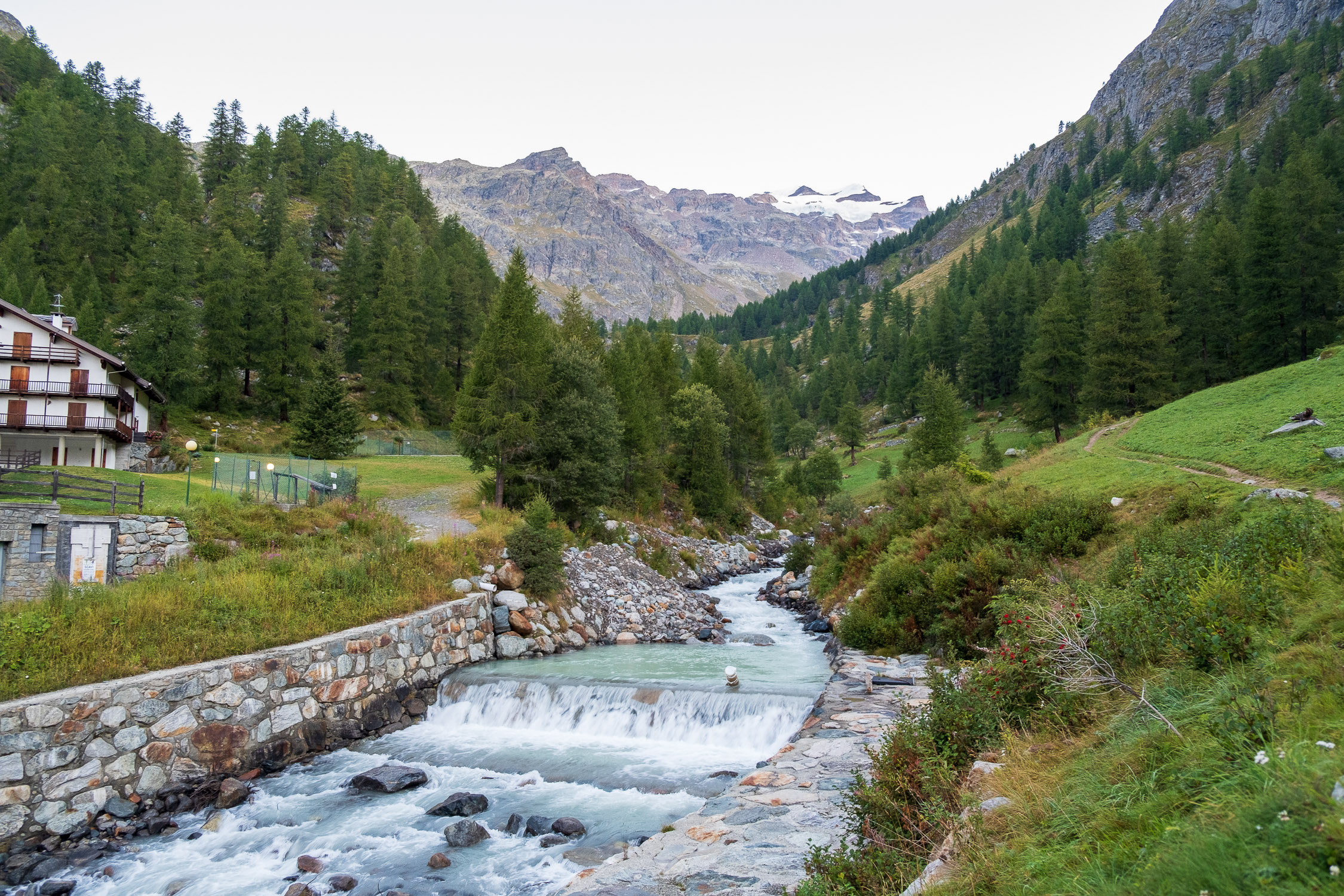
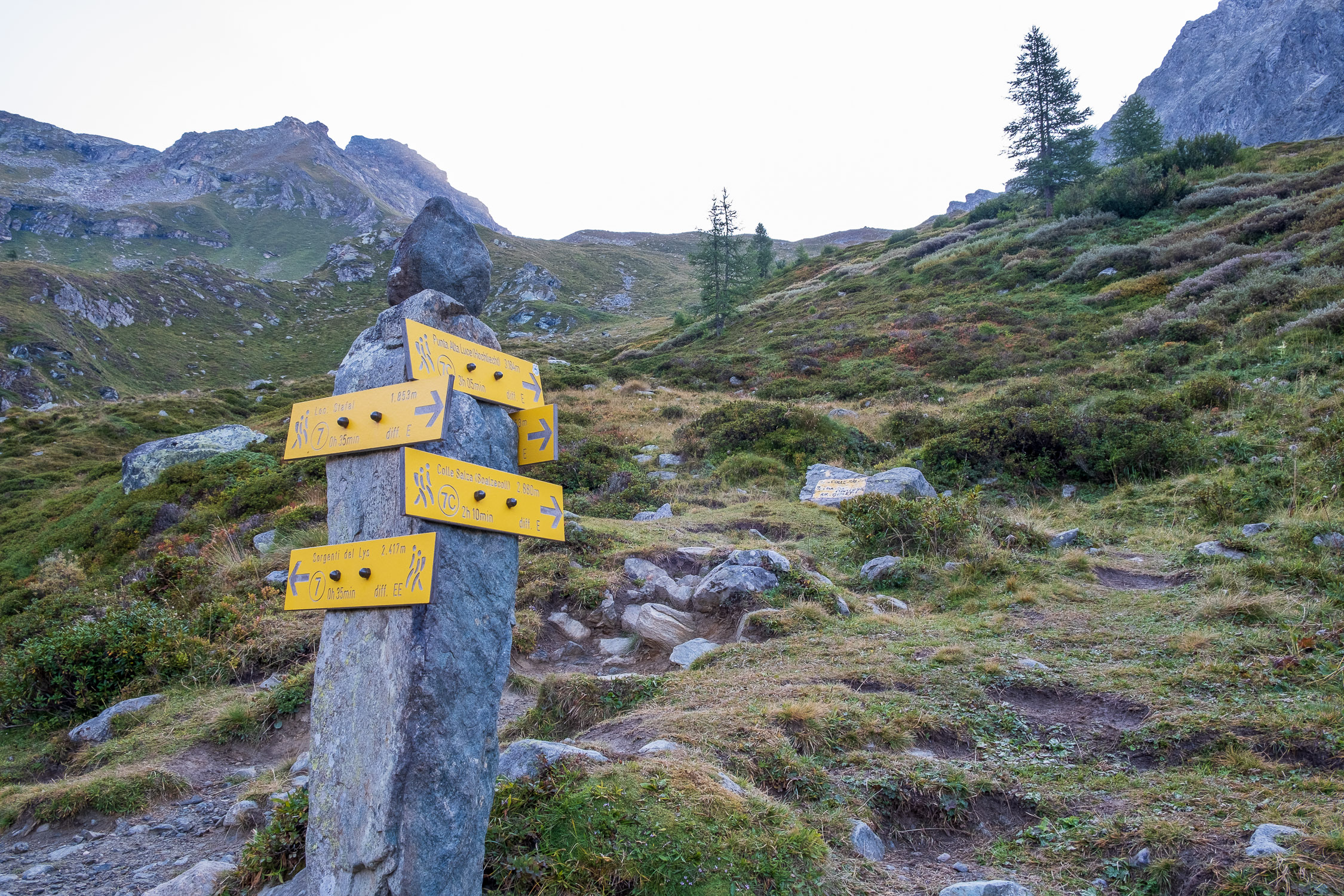
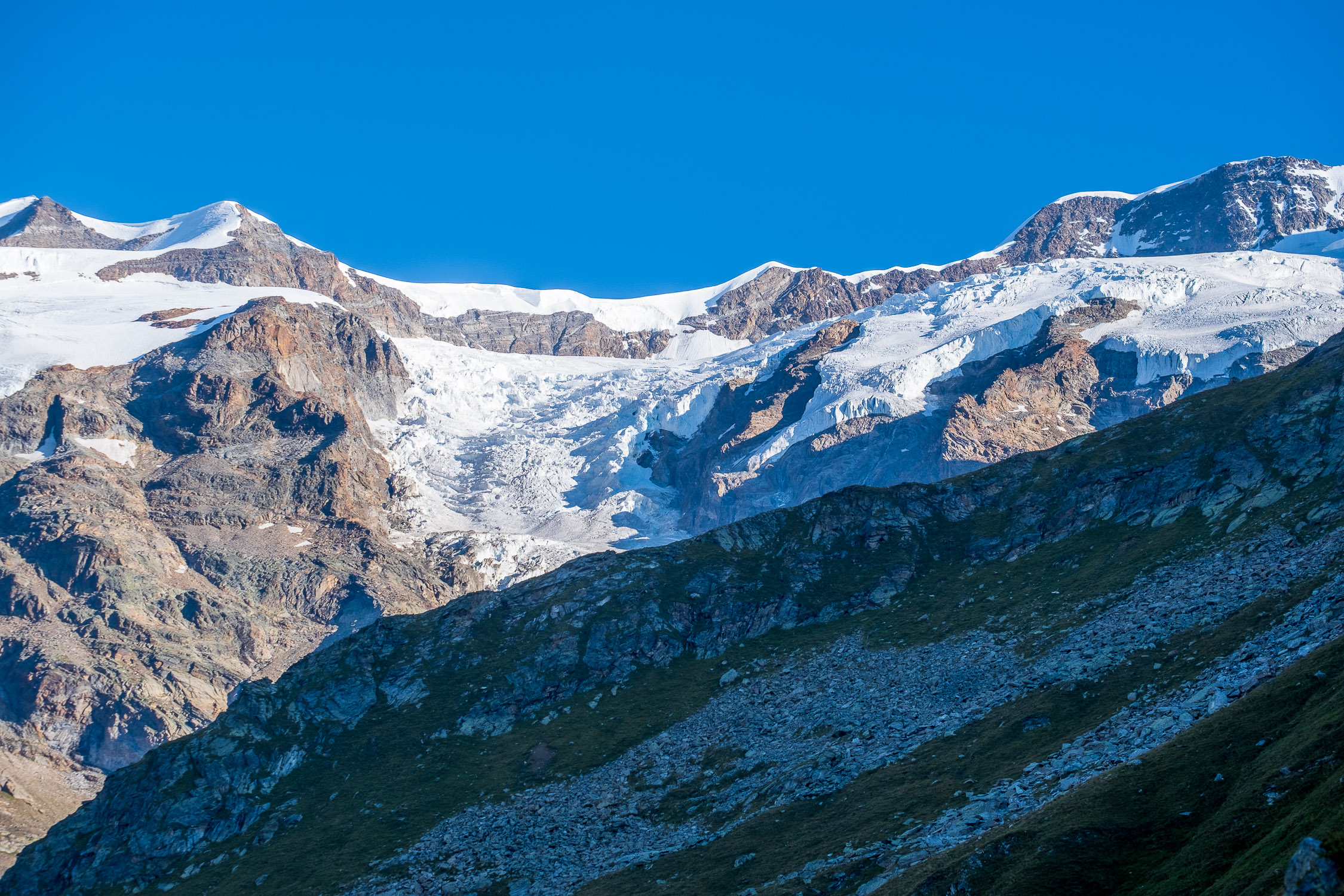
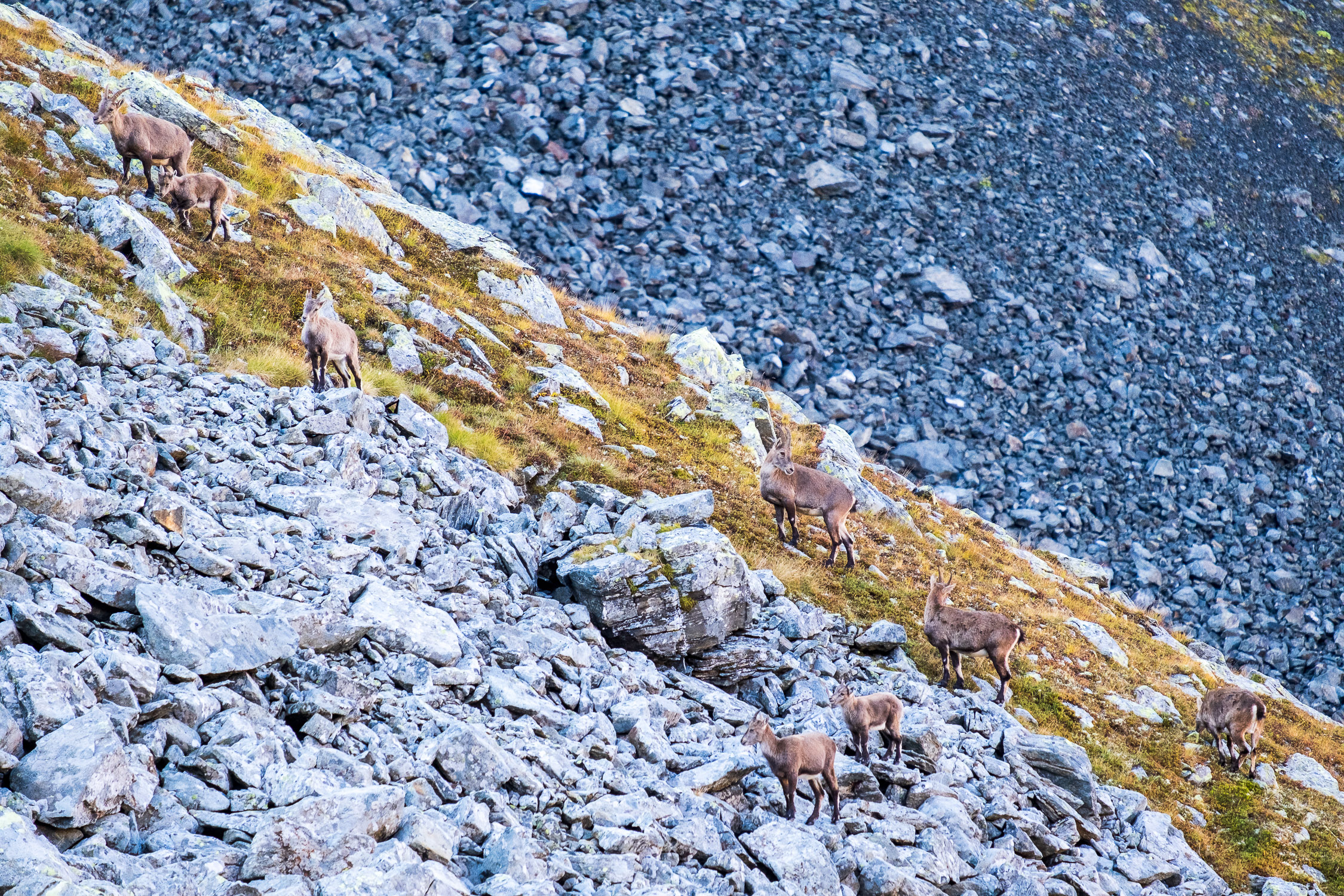
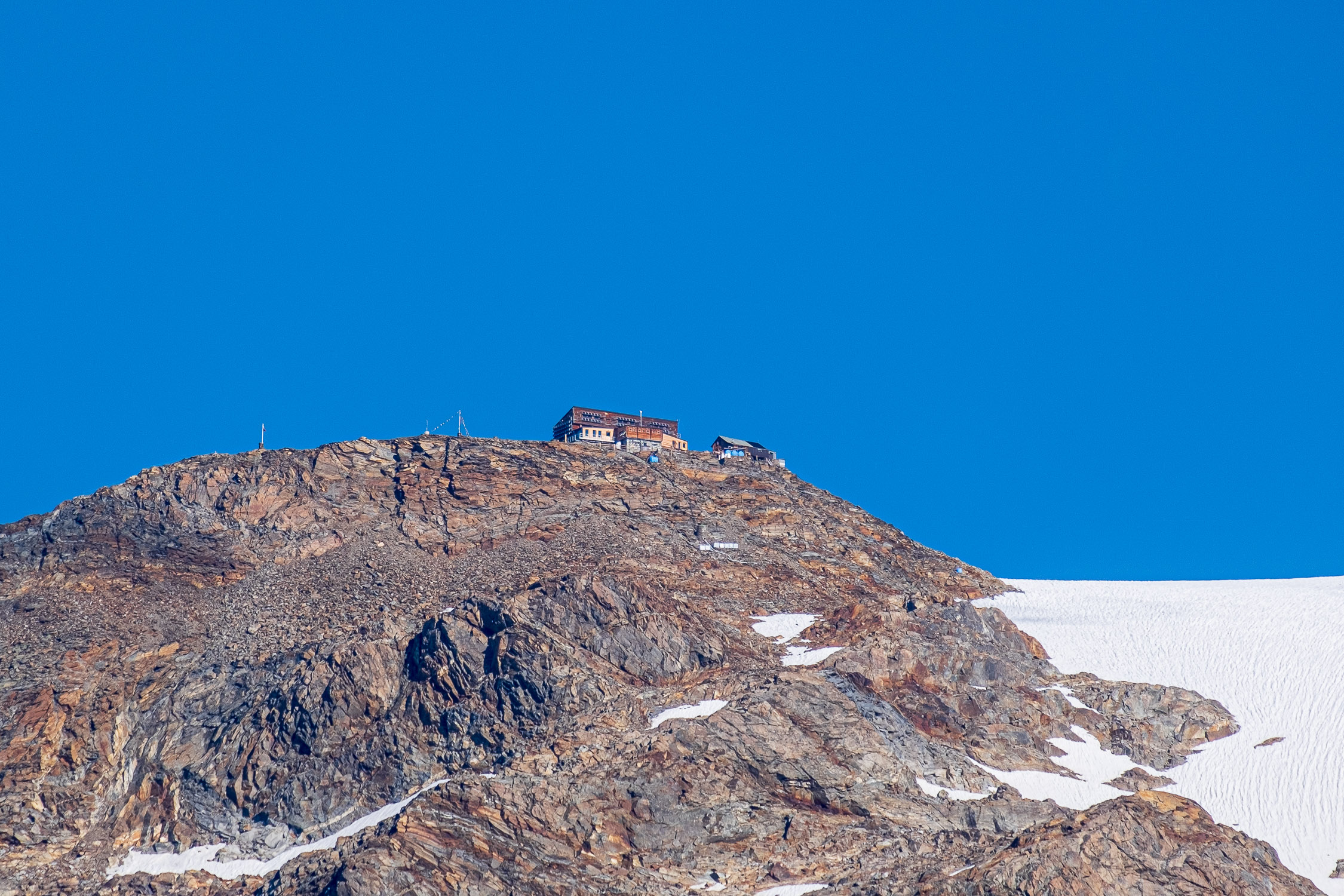
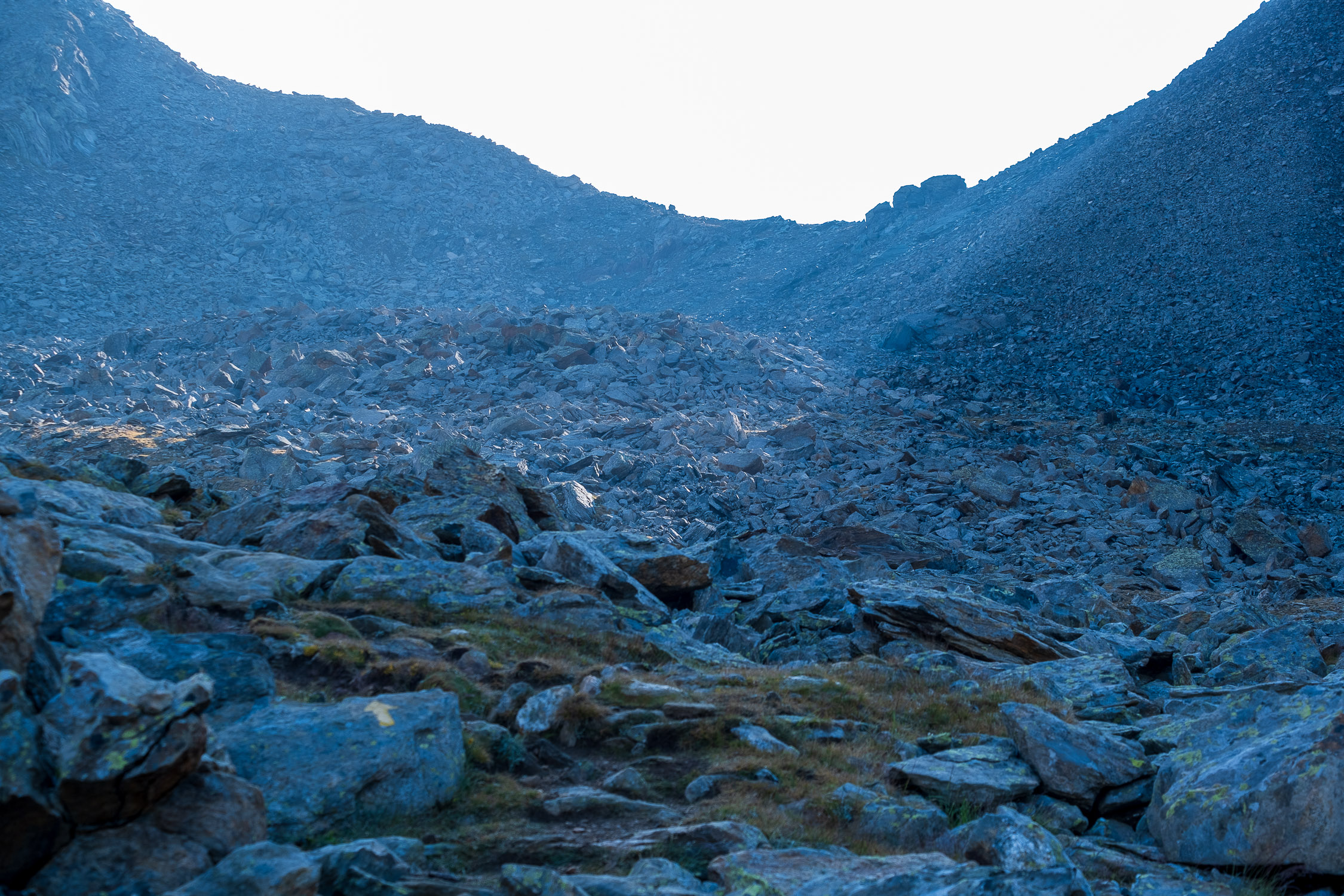
Once you have parked your car in the huge car park in Stafal, continue until you reach the bridge over the Lys at the end of the paved road and take the dirt road on the right: you will soon come across the signpost for
TRAIL 7
, which leads to the sources of the Lys. The initial section of this trail is the same as our trail 7C.
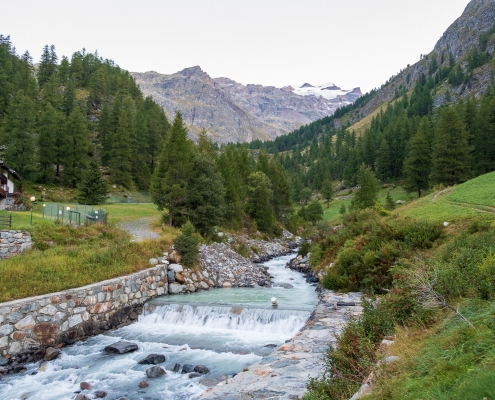
At the start, the trail is to the right of the Lys
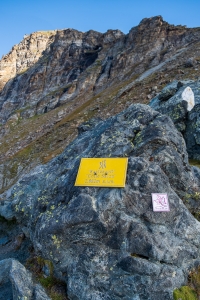
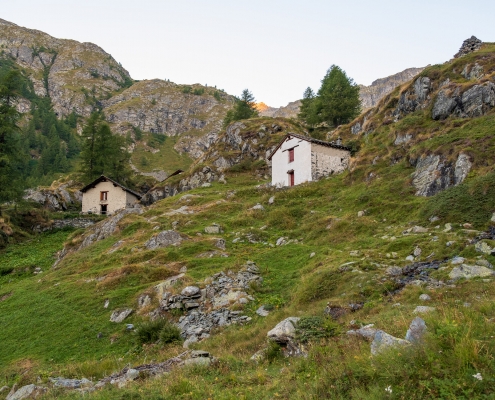
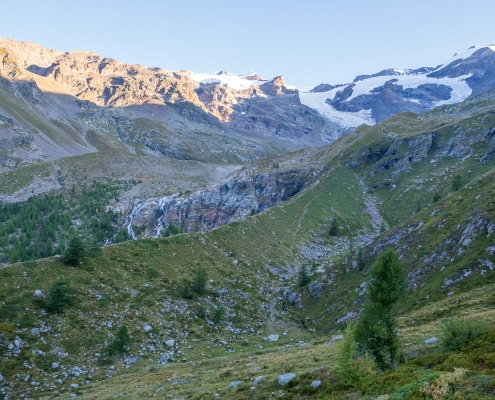
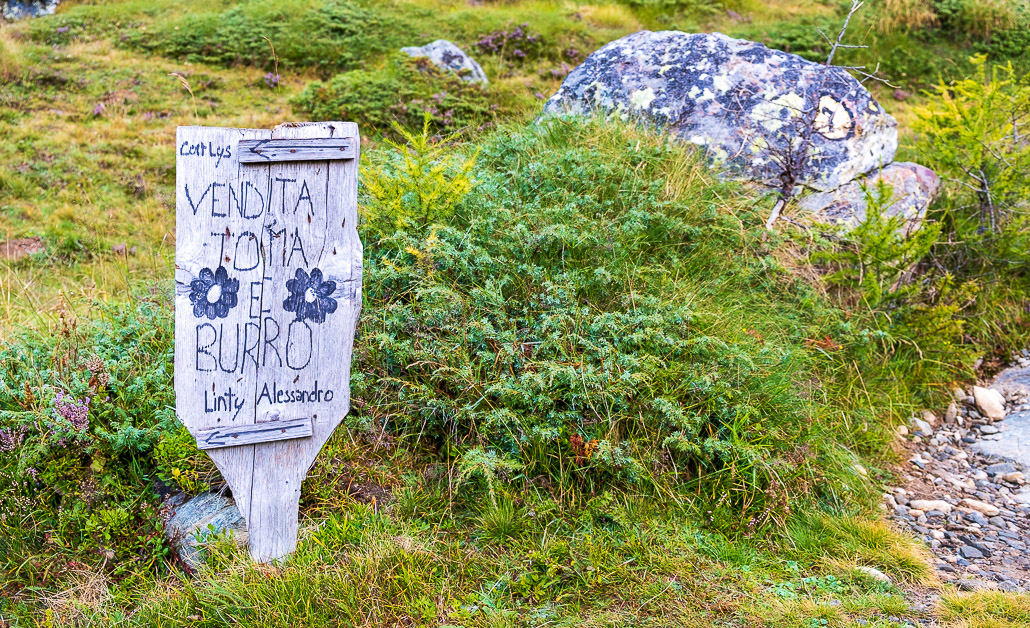
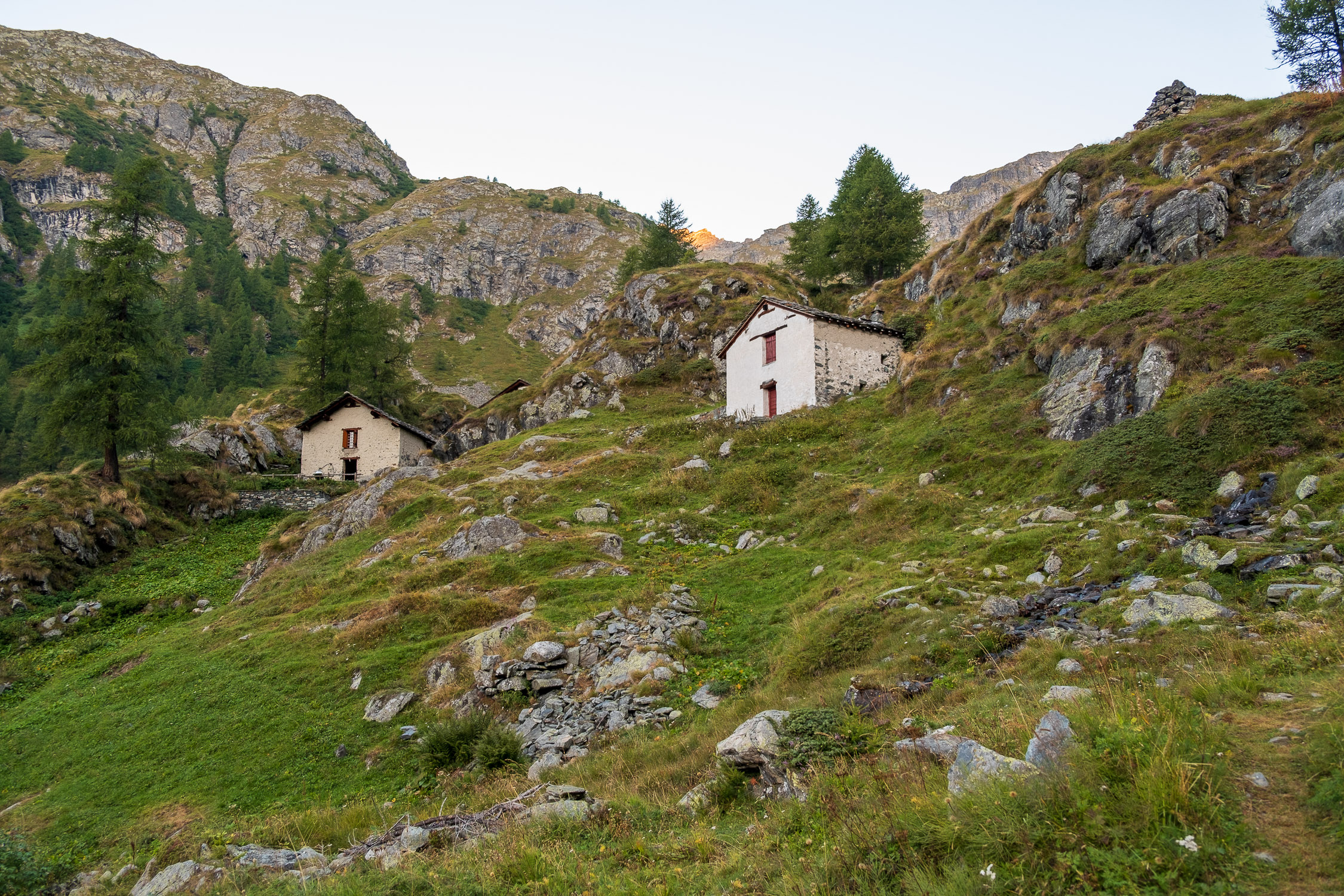
The marked path follows the course of the Lys River on the right, gently gaining altitude. You soon come to a plateau, heralded by a couple of buildings that can be seen from the trail, where the wonderful Alpe Cortlys(1993m) is located. If the sign is displayed you can stop to buy cheese and butter (follow the signs, the hut where the cheese is for sale is a very short distance to the left of the sign).
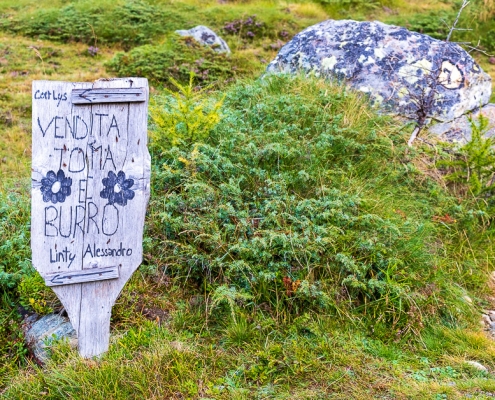
Sign indicating cheese for sale at Cortlys alp.
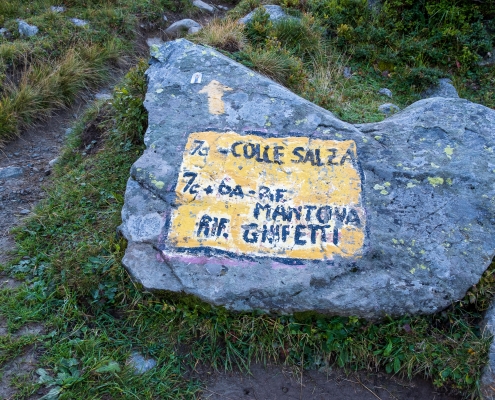
The junction between Trail 7 and 7C is located at 2165 meters, near the lower edge of the left moraine of the Lys.
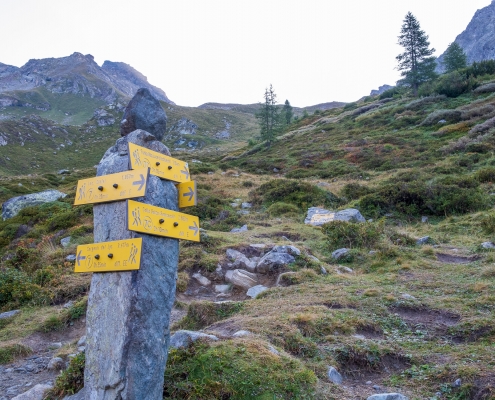
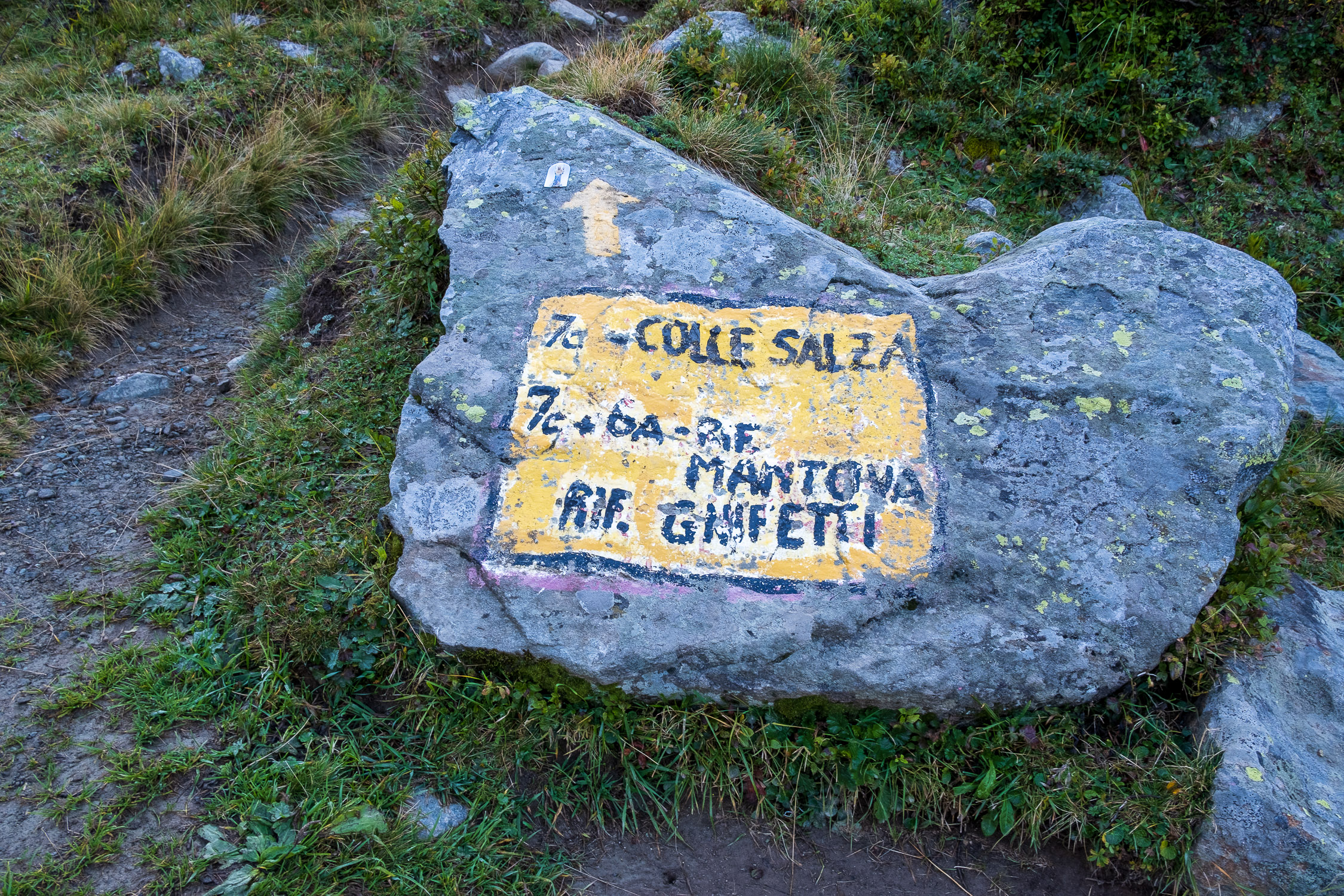
Junction of Trail 7 and Trail 7C: Salza Pass is up there
Leave Trail 7, which continues toward the springs, and take Trail 7C, which climbs up the long Salza valley, facing east and bounded on the south by the rocky wall of Punta Telcio (2,833 m, accessible via
TRAIL 2)
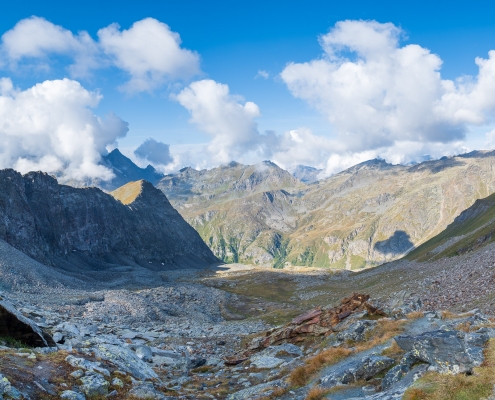
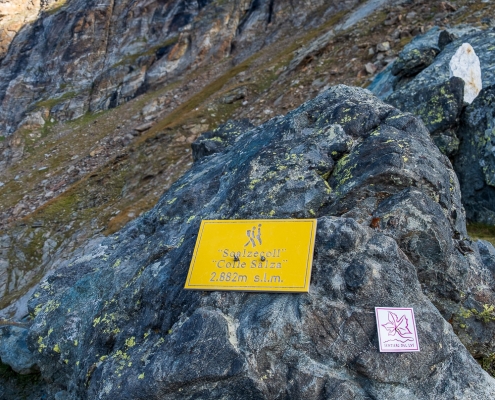
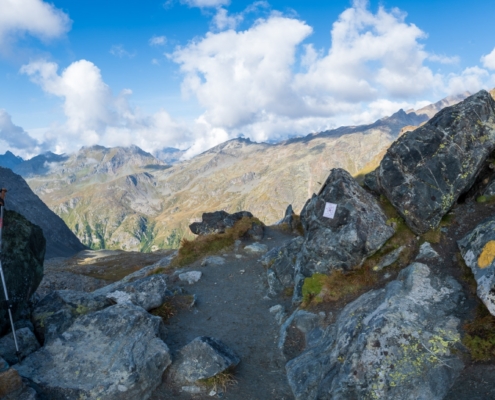
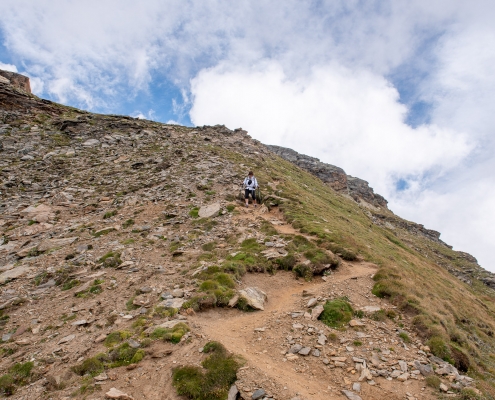
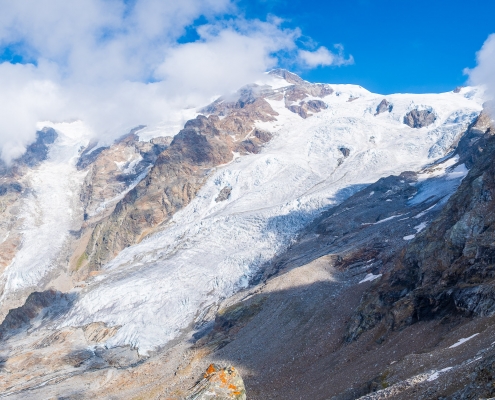
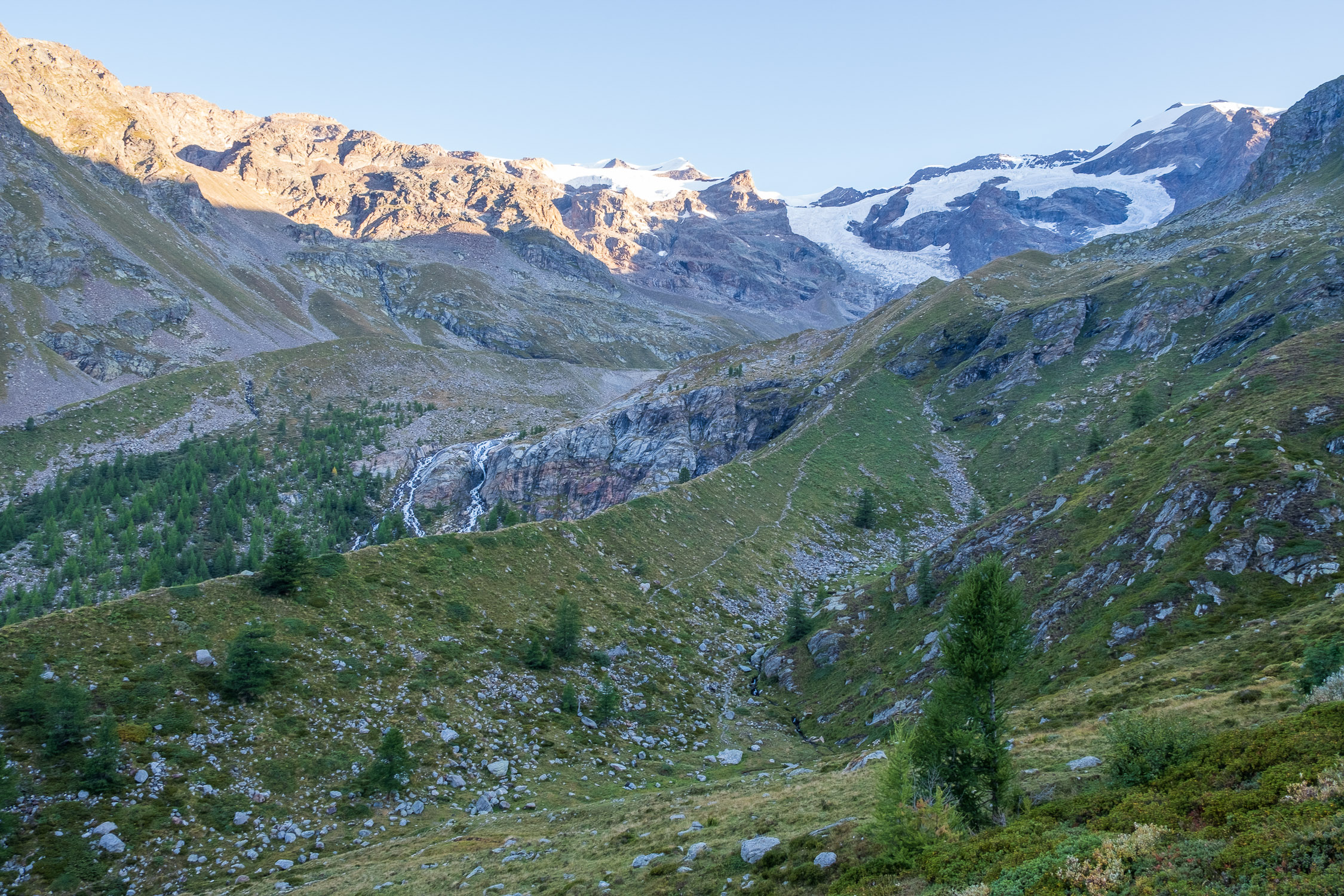
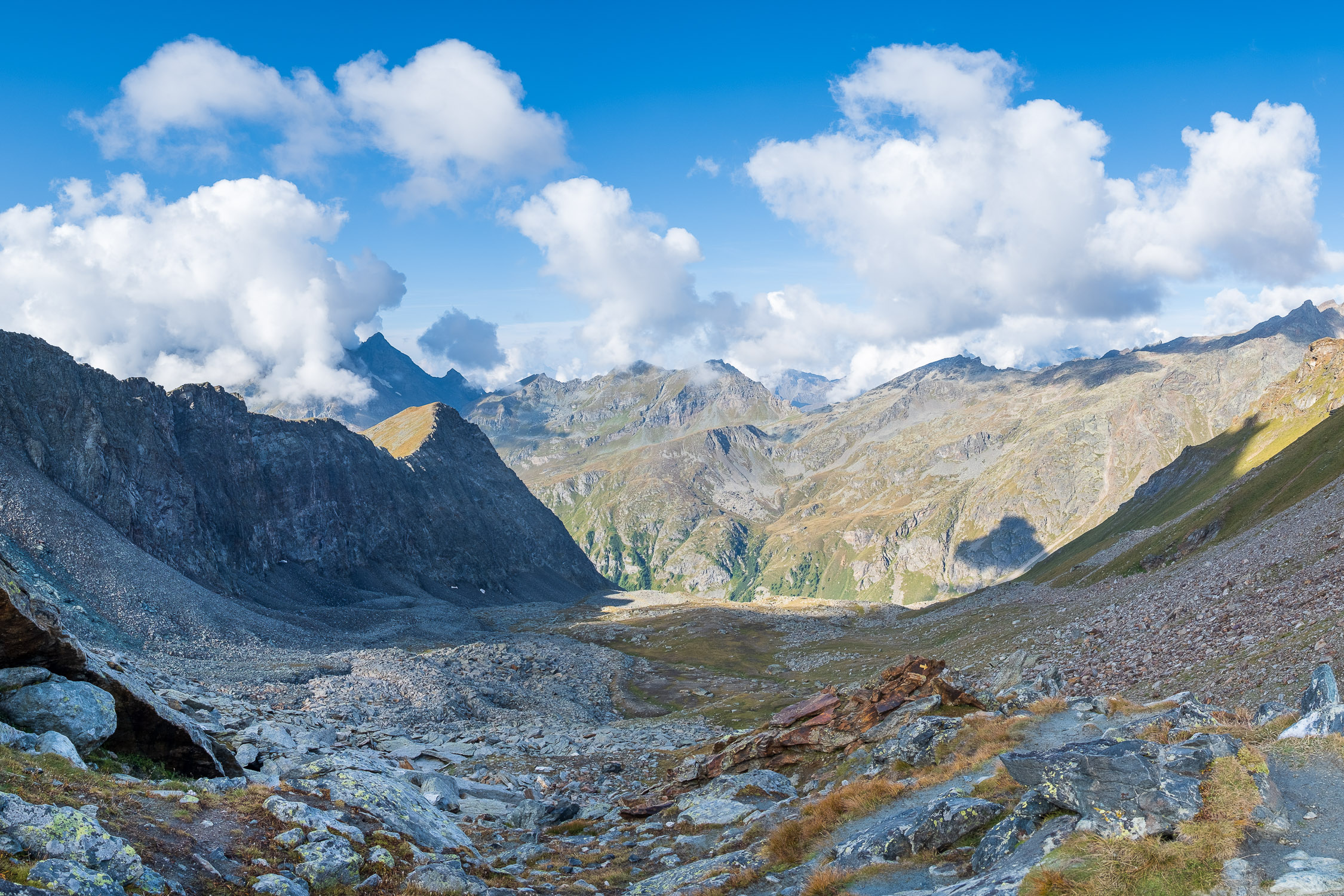
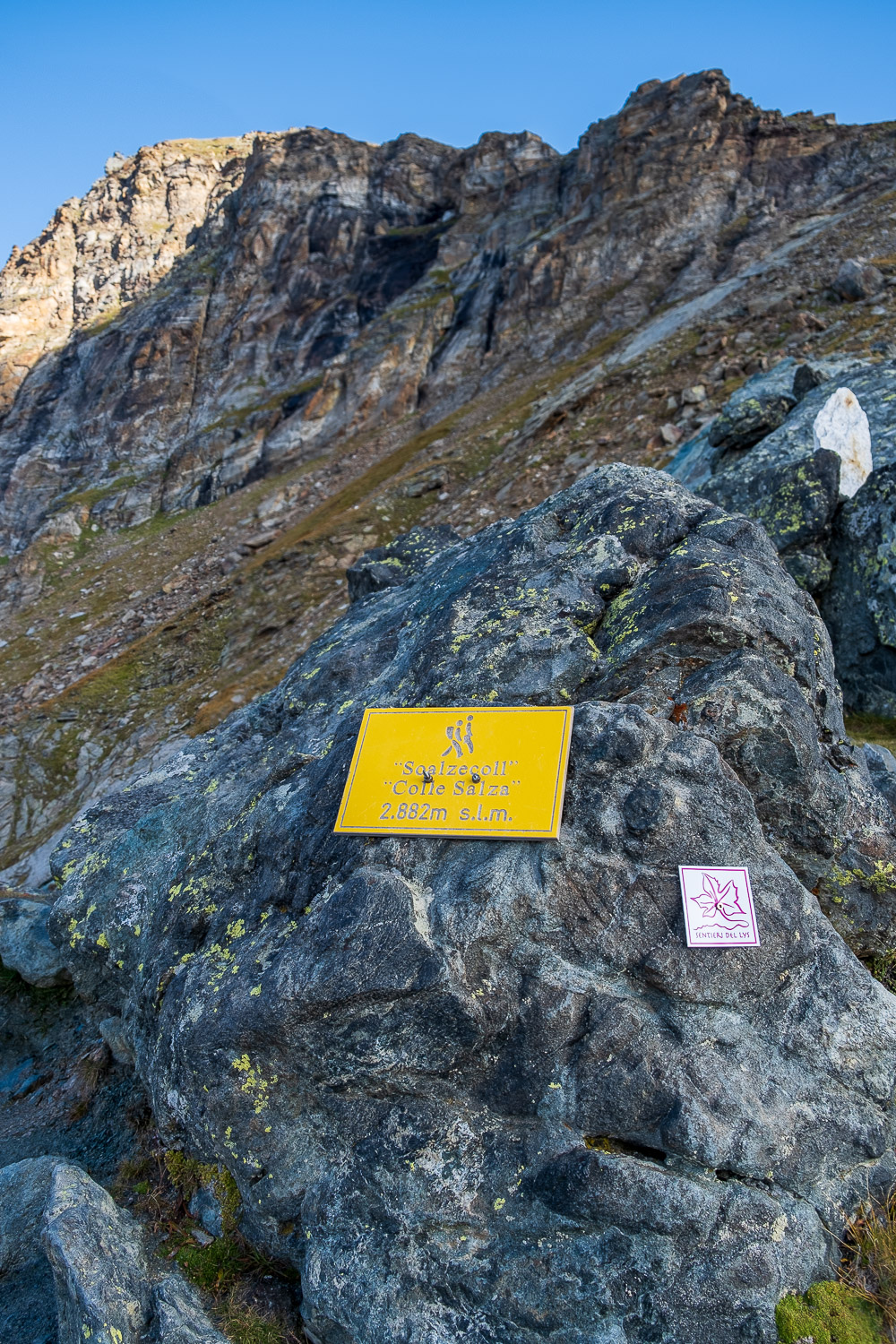
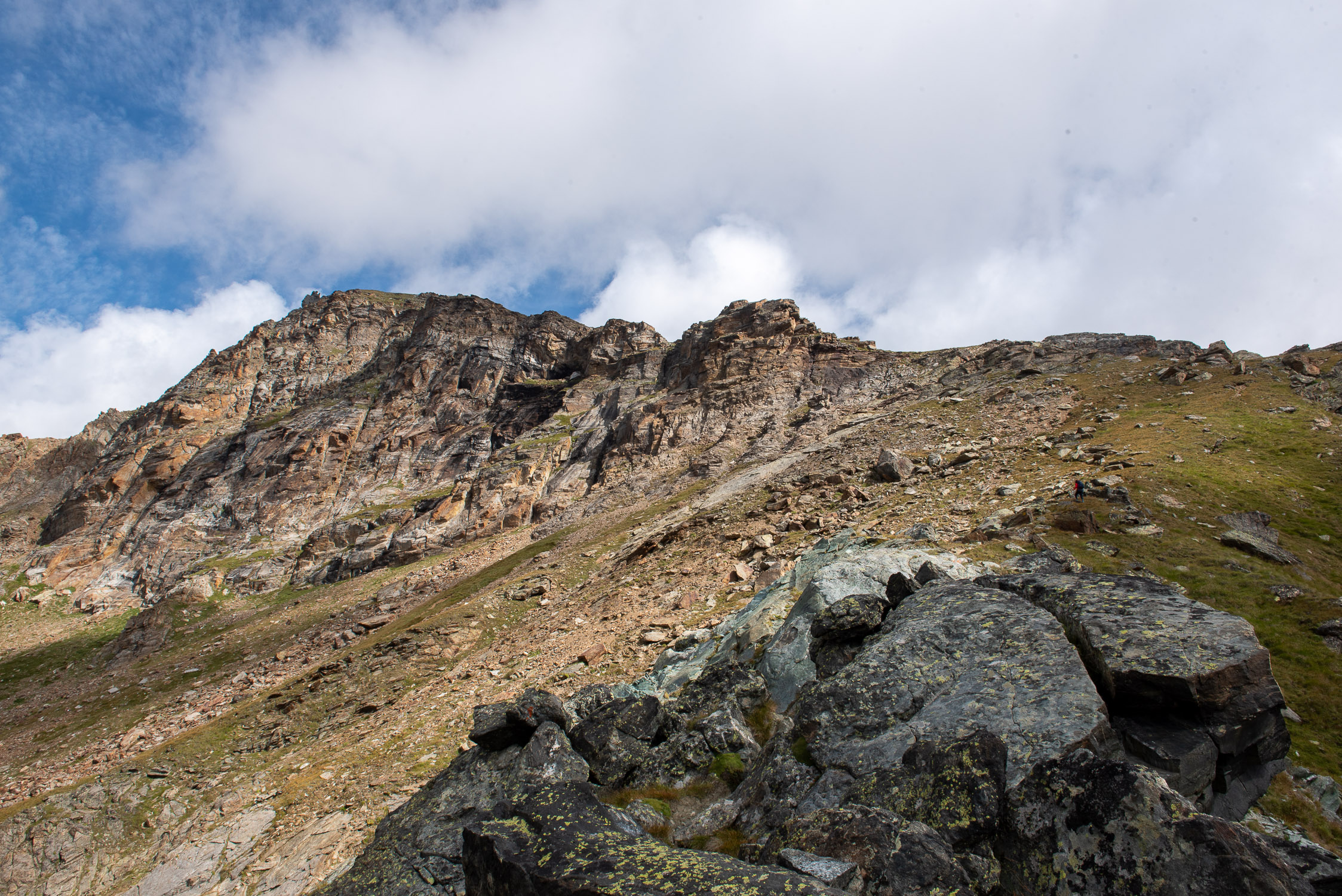
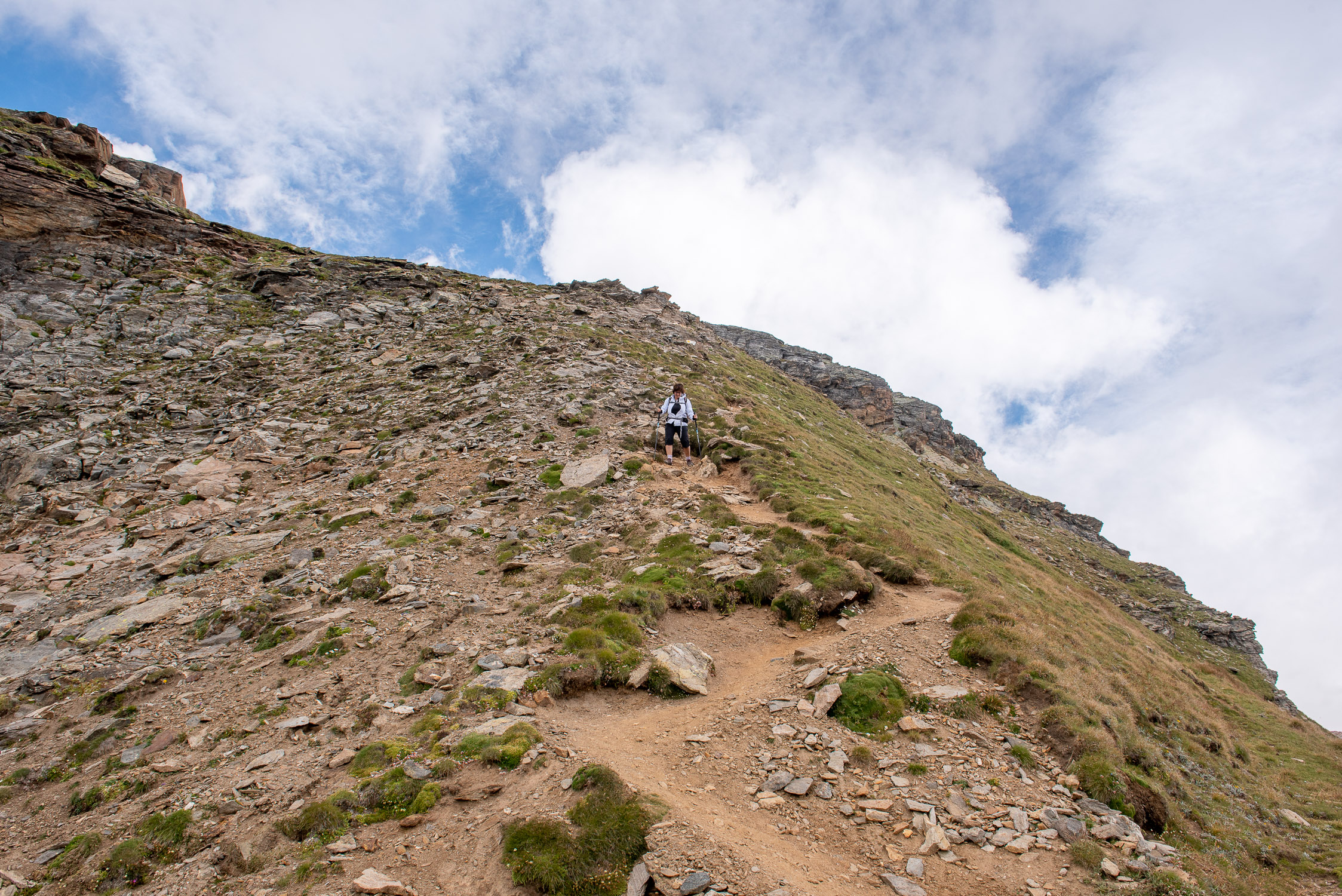
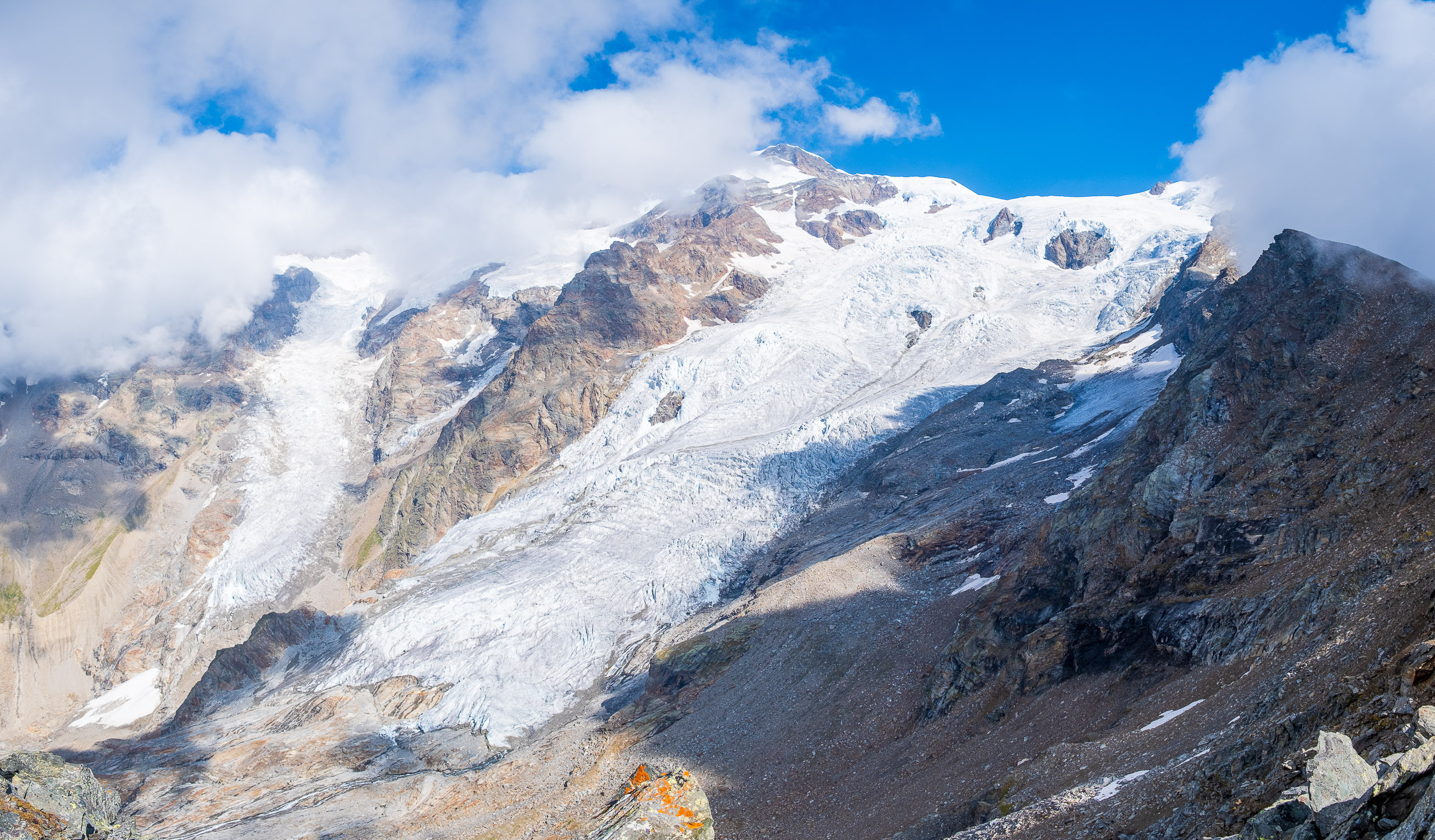
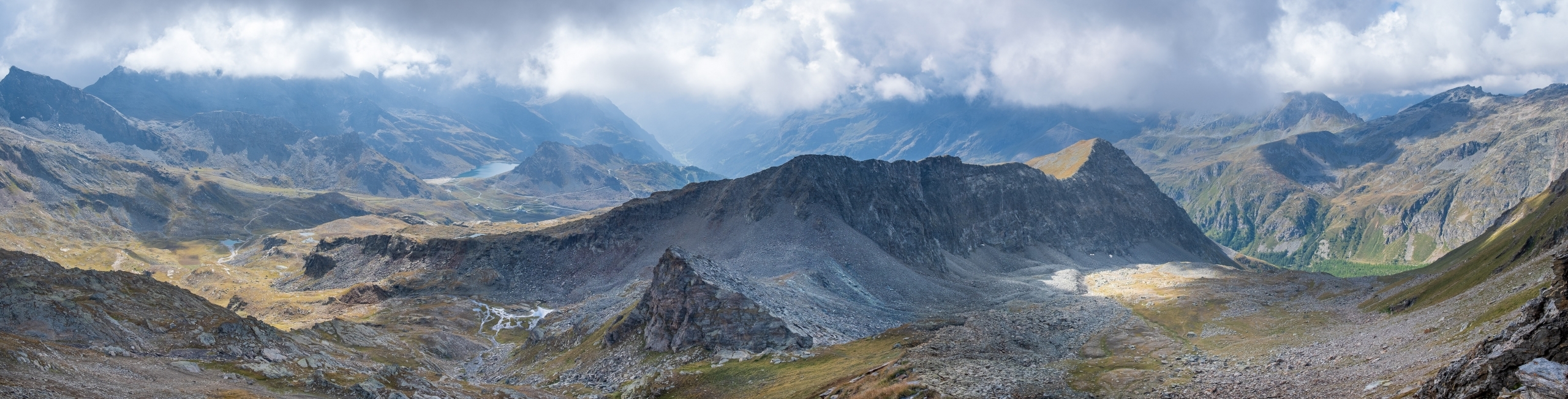
. You pass the remains of the Alpe Salza Inferiore at 2323 meters, while as you climb the view of the Rosa mountain range becomes wider and wider. The trail continues to climb, passing short plateaus, until it reaches Colle Salza at 2,882 meters (about 3 hours from Stafal). The last ramp before the pass is quite steep and slippery; it is definitely the most technically challenging point of the entire trail.
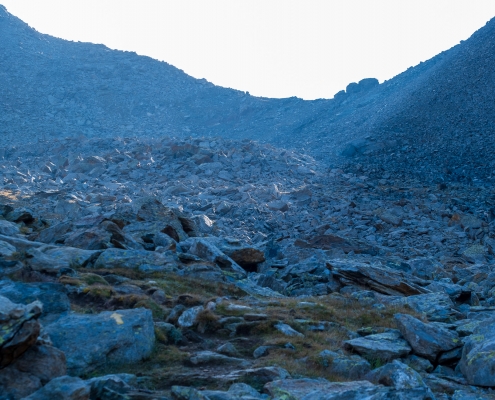
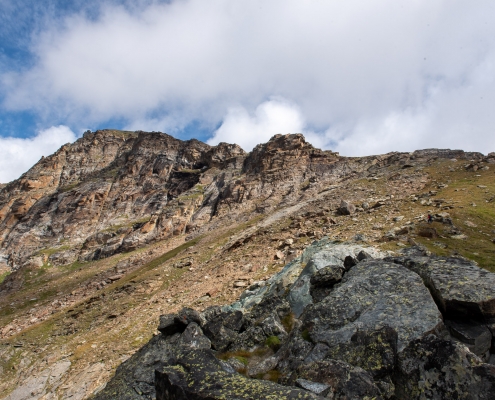
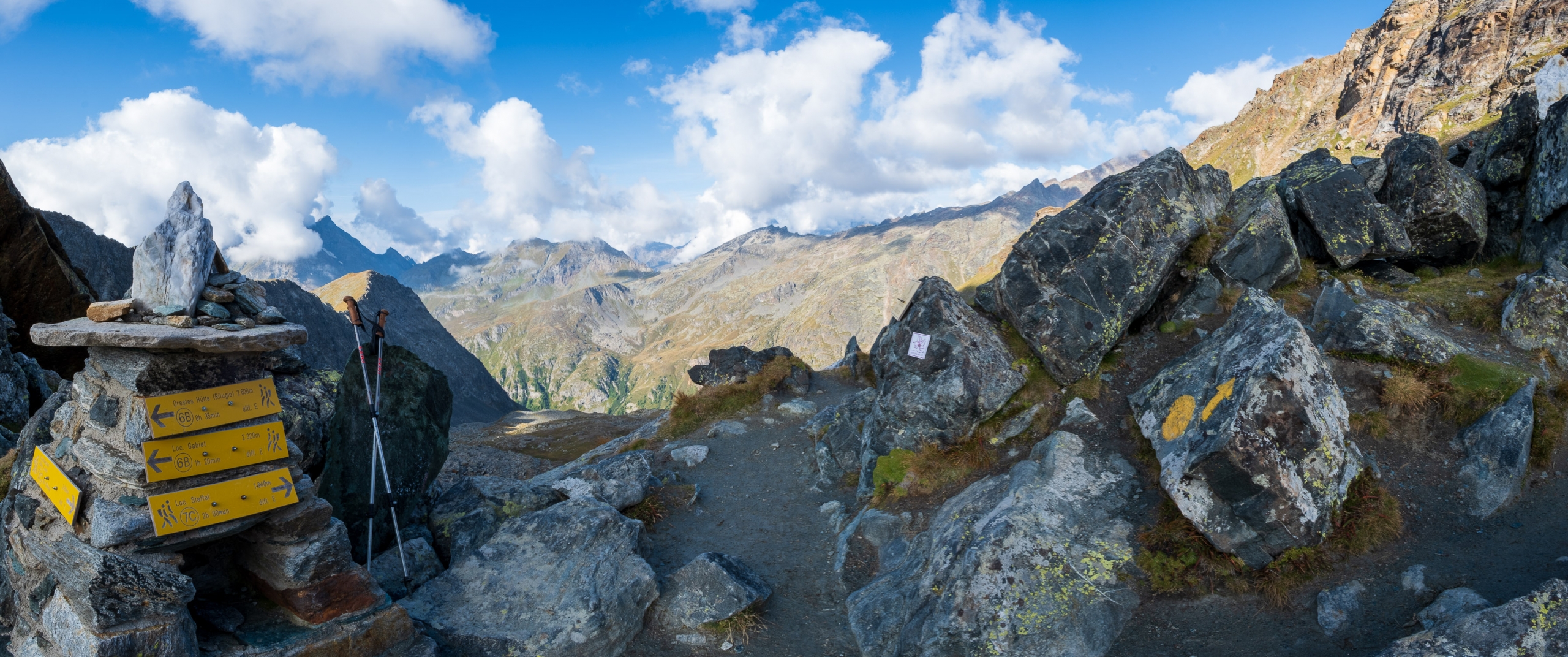
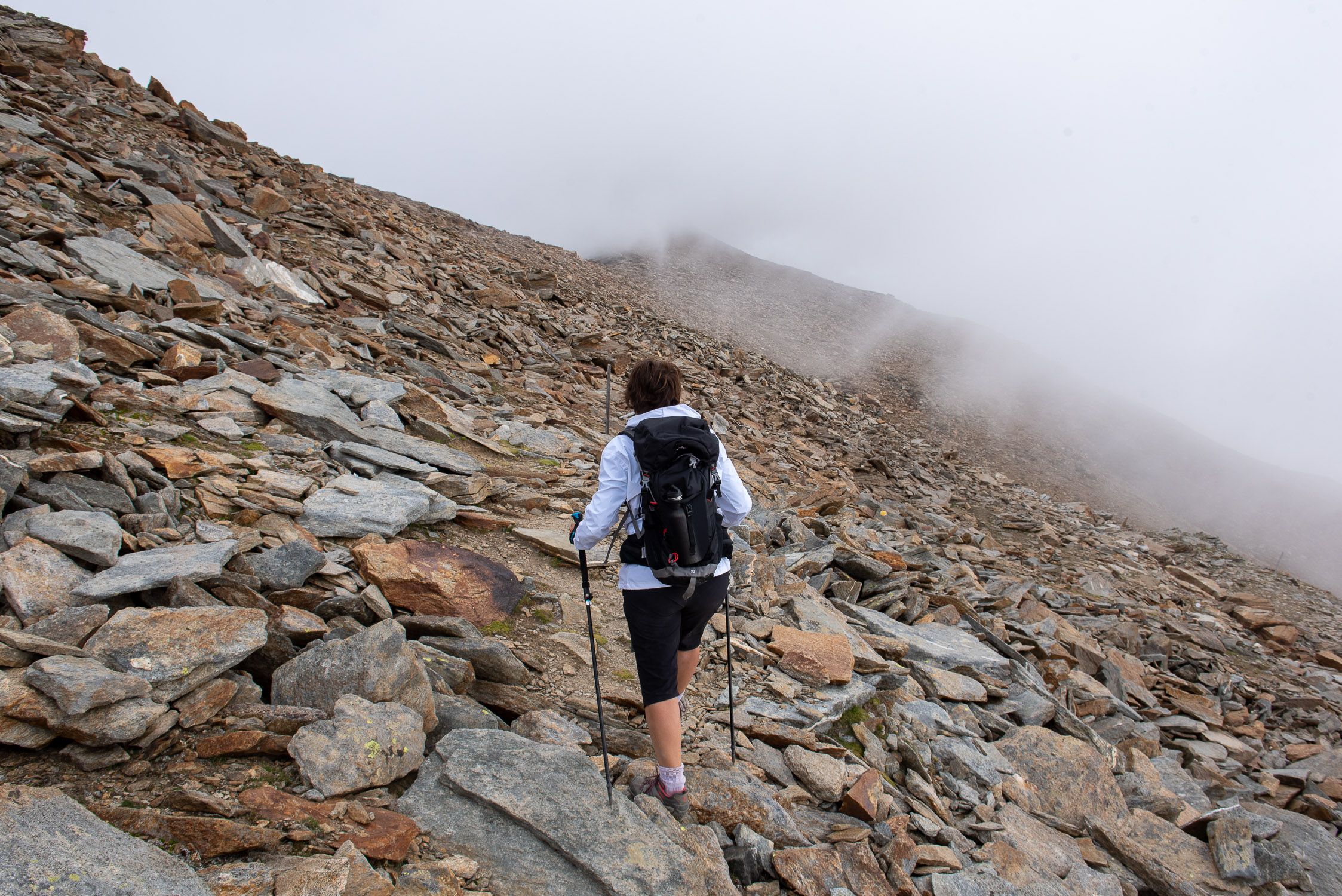
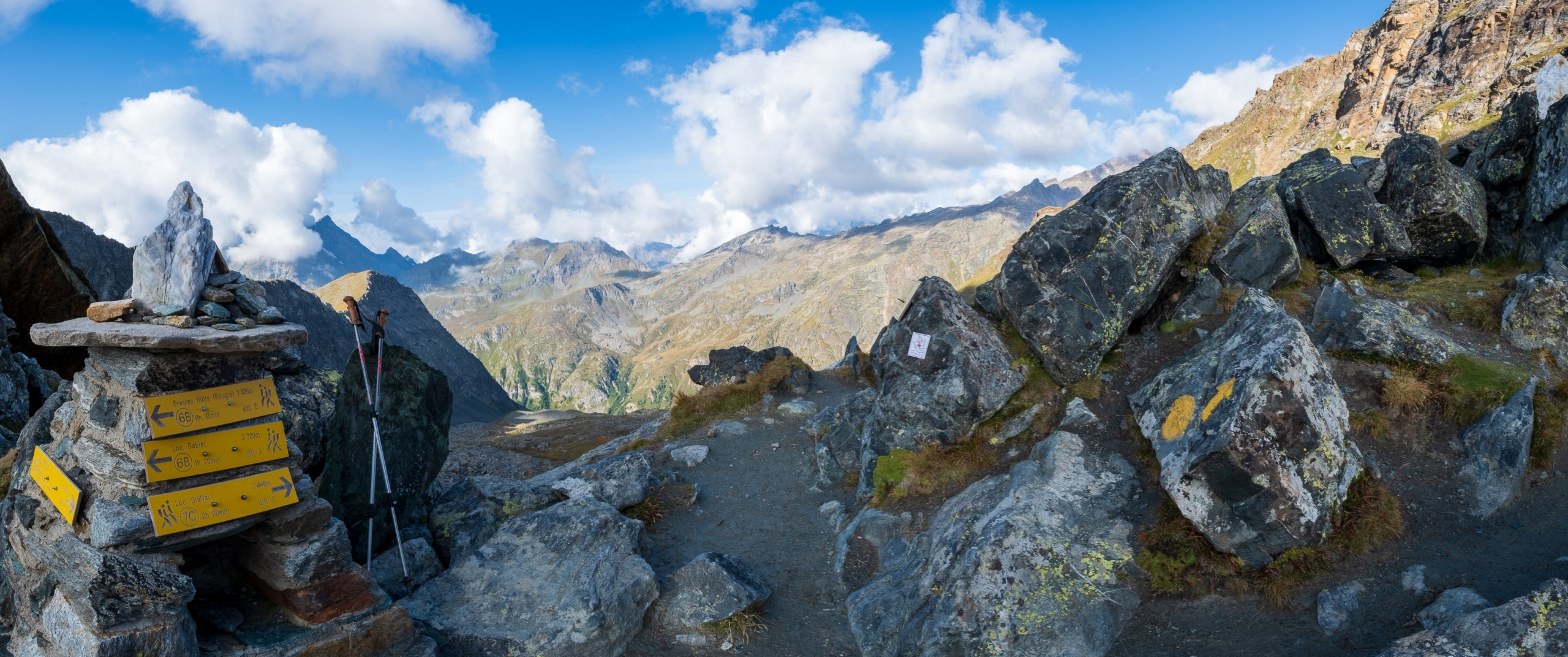
There are several options from the Salza pass: you can descend to the Orestes Hutte via trail 6B (and from there return to the Gabiet shelf), or you can continue until you meet trail 6A, which leads to the Città di Mantova hut (and from there to the Gnifetti Hut). We continue along trail 7C, which climbs along the north ridge from the Salza Pass, at first quite steep and over rather slippery scree, then gentler but still on the “merry andante.” The trail ascends into a small stony valley next to the ridge, then continues in wide turns, still on decidedly stony terrain…
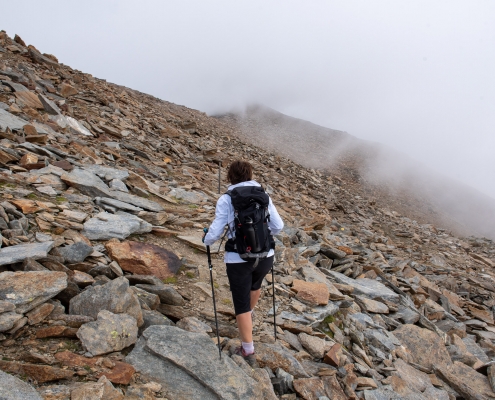
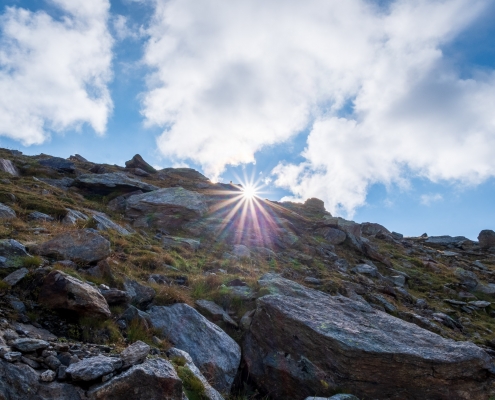
Ascending to the Alta Luce
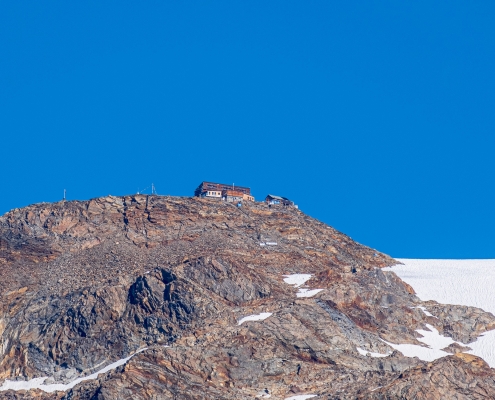
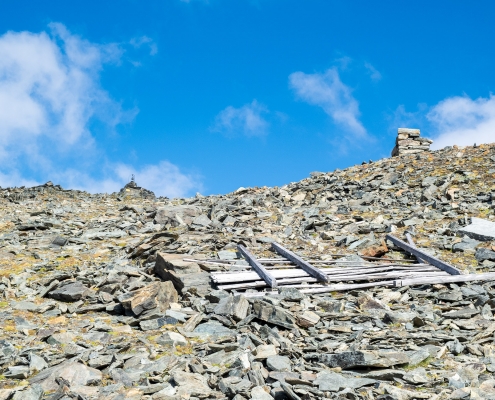
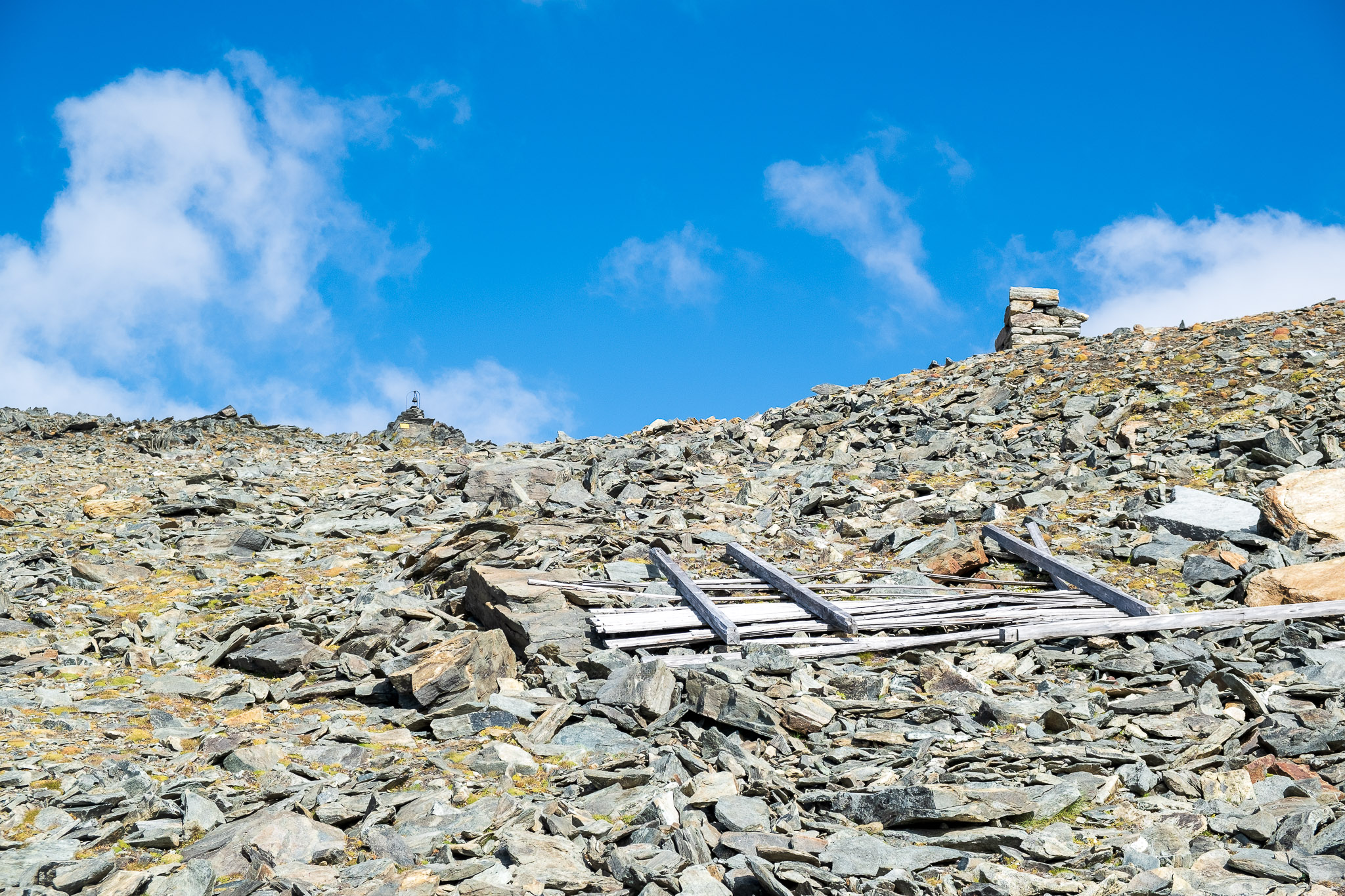
…until you reach the new bivouac Remo Passera (3,175 m). The old bivouac Passera was destroyed by a storm in 1983: you’ll find more information on this page.
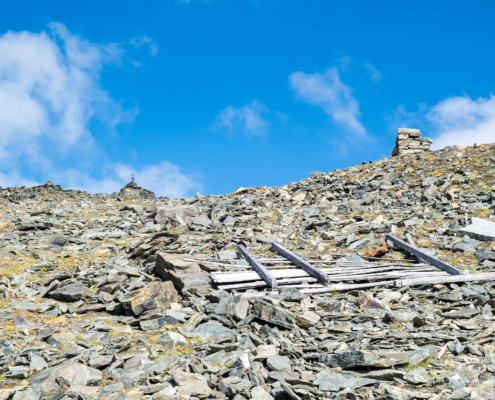
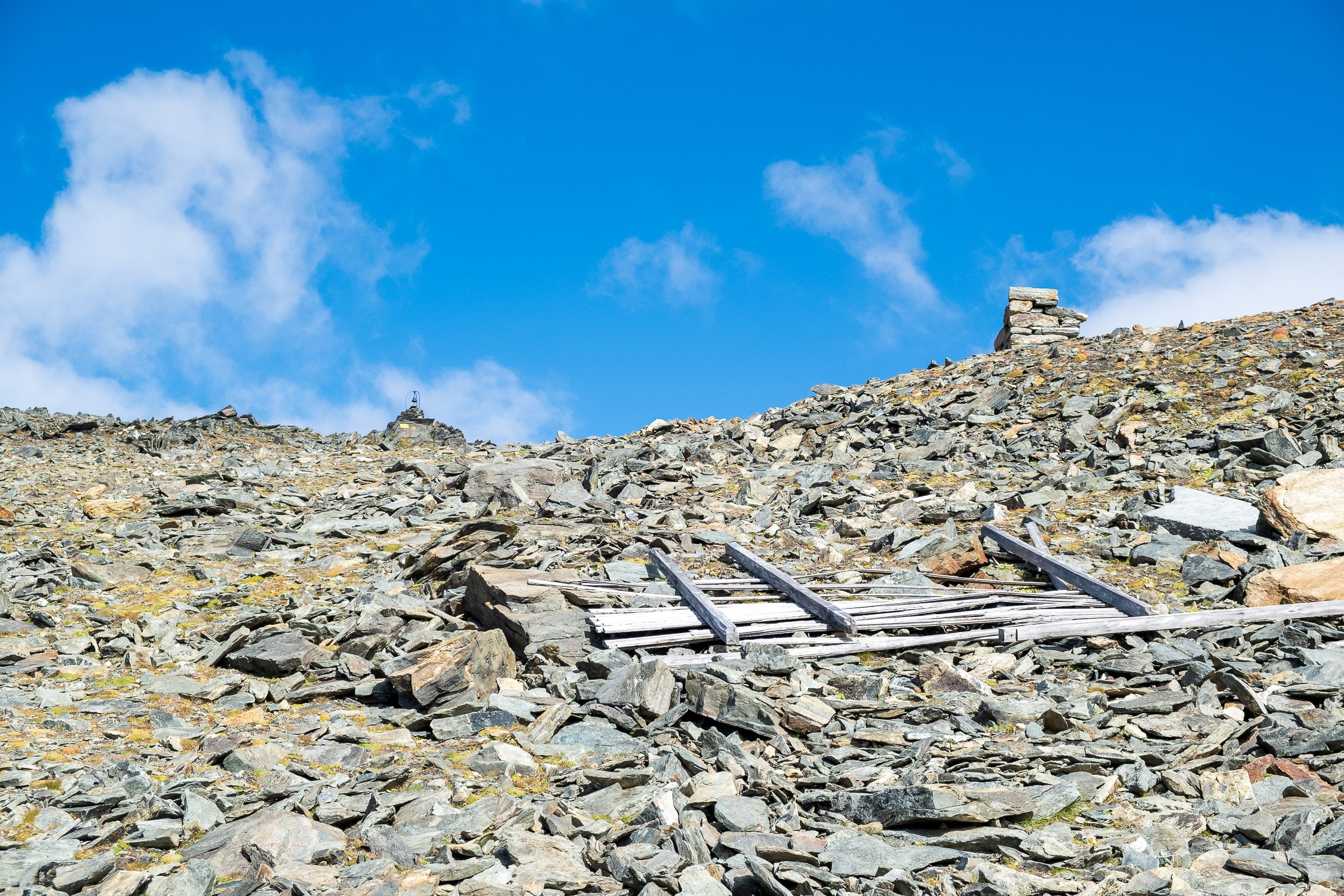
Remains of the old bivouac Passera , before the new bivouac was built
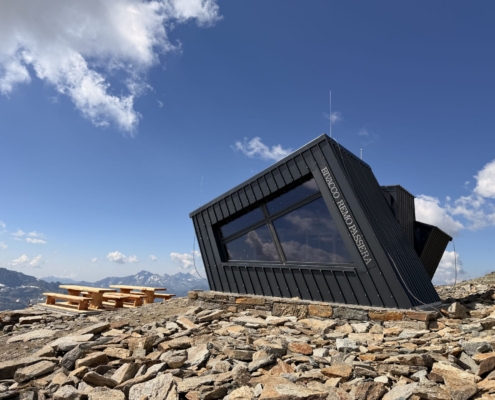
The new bivouac Remo Passera
The new bivouac Remo Passera was inaugurated on July 22, 2026. To access the campsite, you must book in advance using this website. The entrance to the shelter remains open at all times and accessible to everyone. In the event of an emergency or adverse weather conditions, you can call the phone number posted inside the entranceway to receive instructions on how to access the interior of the building. More information is available on this page.
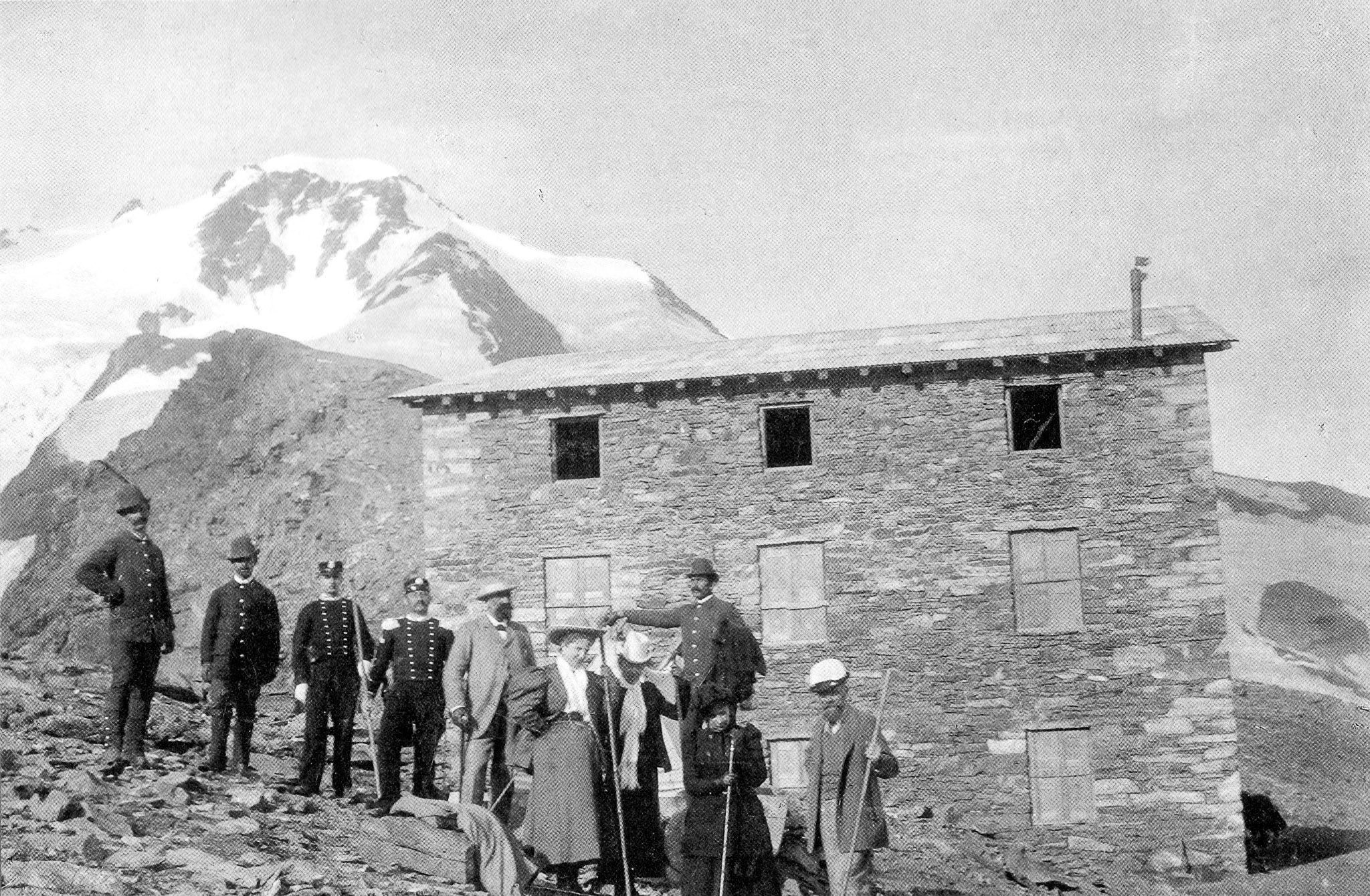
Just above, you can see the remains of Baron Peccoz’s hunting lodge, visible in this photo from 1894 when Queen Margherita visited it with her entourage (photo taken from *Cervino e Monte Rosa*, by Alessandro Gogna and Marco Milani, 2007):
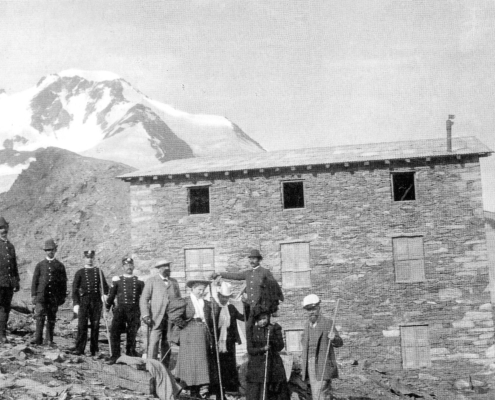
Queen Margaret at the Peccoz hut, 1894
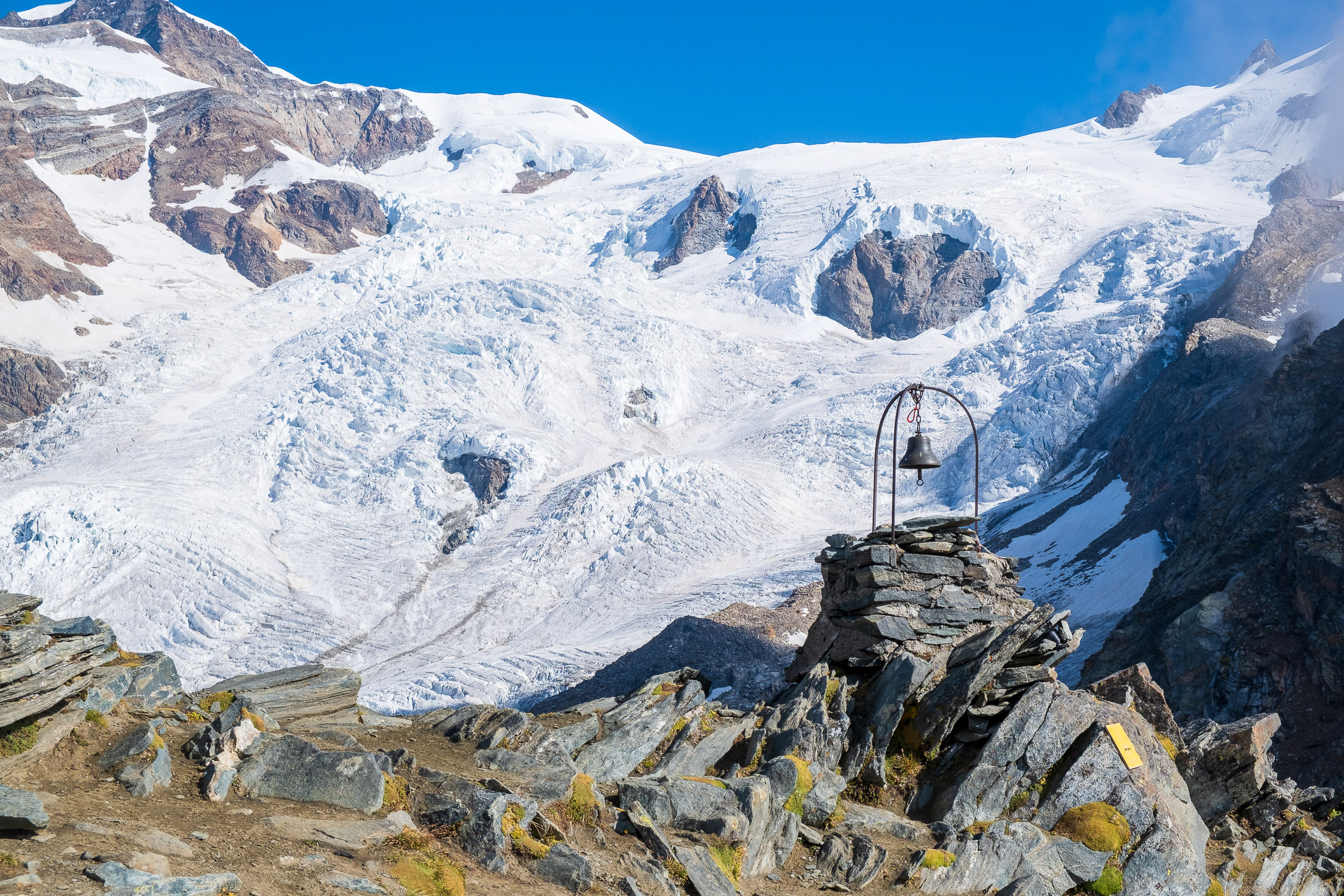
The bell marking the arrival at the summit is now very close, as is one of the most spectacular viewpoints in the entire Gressoney valley.
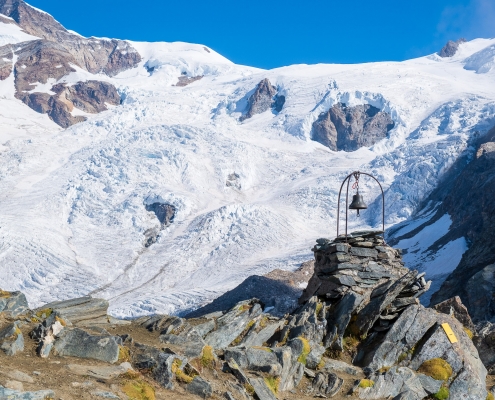
The summit bell of the Alta Luce